Two recent articles in Nature, Abrupt increase in harvested forest area over Europe after 2015 (Ceccherini et al., 2020) and Concerns about harvested area and biomass loss in European forests (Palahí et al., 2021) have opened up an important debate about the forest-based bioeconomy in Europe and its impact on forest harvesting. What is clear is that the forest harvest has increased by 6% in the last few years (FAOSTAT, 2019) and not the 69% as reported by Ceccherini et al. (2020). The differences in estimate are due to a number of factors that together mean that the predictions of Ceccherini et al. (2020) are unsafe:

1. One of the most important errors in the predictions is due to the increasing sensitivity of the satellites and disturbance detection algorithms since 2015. This increased sensitivity means that many small-scale forest operations such as thinnings and small clearings are now being included as harvesting that were missed prior to 2015. It also means that harvesting or disturbance within the forest prior to 2015 might have been missed in the satellite data at these earlier dates, but would suddenly have been detected in 2015 and would represent a step increase in disturbance levels.

2. There were many examples of erroneous inclusion of natural disturbances. A number of large scale disturbances to European forests in the period after 2015 from wind, pine processionary moths, and bark-beetle attacks were erroneously ascribed to human activity and artificially inflated the estimates of forest harvesting.

3. The methodology of mapping change by counting individual pixels in the satellite data and adding up all the pixels designated as disturbance to compute the total area lacks statistical rigor and can produce biased estimates. A proper stratified sampling methodology (Olofsson et al., 2013) should be used that accounts for both omission errors (false negatives) and commission errors (false positives).

Overall these factors led to the false impression that harvesting in Europe has increased dramatically since 2015. It also led Ceccherini et al. (2020) to ascribe this apparent change to European Union policies on bio-energy and promotion of wood as a source of bio-energy without any evidence supporting that conclusion.

The debate has demonstrated a number of important points:

1. Measuring and monitoring European forests is more important than ever. In particular, it is especially important that we adopt a consistent approach to forest monitoring across Europe (Tomppo and Schadauer, 2008)

2. Remote sensing data must always be checked against other data such as ground-based measurements or national forest statistics (Wernick et al., 2021). Using remote sensing data without corroborating evidence is open to the possibility of mistakes due to incorrect data interpretation or sampling bias.

3. Planted forests will continue to provide an increasing amount of wood and other forest based raw materials into the European industrial sector, while at the same time contributing to the climate mitigation goals of the Europe Union (European Commission, 2018).

4. The demand for wood-based materials will increase as society moves to an economy more reliant on sustainable raw material production with an increased use of plant-based material; the so called “green economy”. Planted forests offer one of the few ways to meet this increasing demand in a manner consistent with a need to also mitigate the impacts of climate change (Gardiner and Moore, 2014).

The role of planted, high production forests is becoming more and more important in the European economy both now and in the future. Despite concerns about the impacts of planted forests on bio-diversity and their vulnerability to different hazards, it is clear that with careful planning and appropriate management practices it is possible to increase the area and production from planted forests (Larsen et al., 2017) that also benefits the environment and with reduced levels of risk (Jactel et al., 2017). The key is a proper understanding of the complex interactions between forests, management, climate, environment, and society. IEFC is in a unique position to help in developing that understanding through its strong network of partners and its direct connection with the forestry and forest products processing sectors.

By: Barry Gardiner (IEFC)

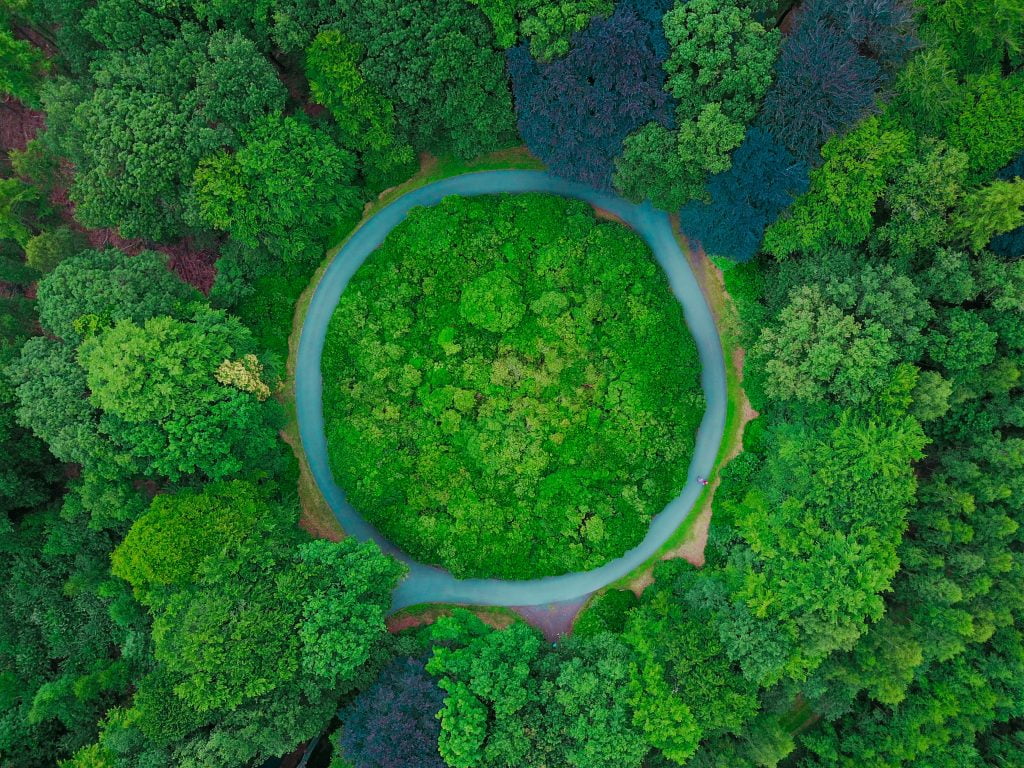
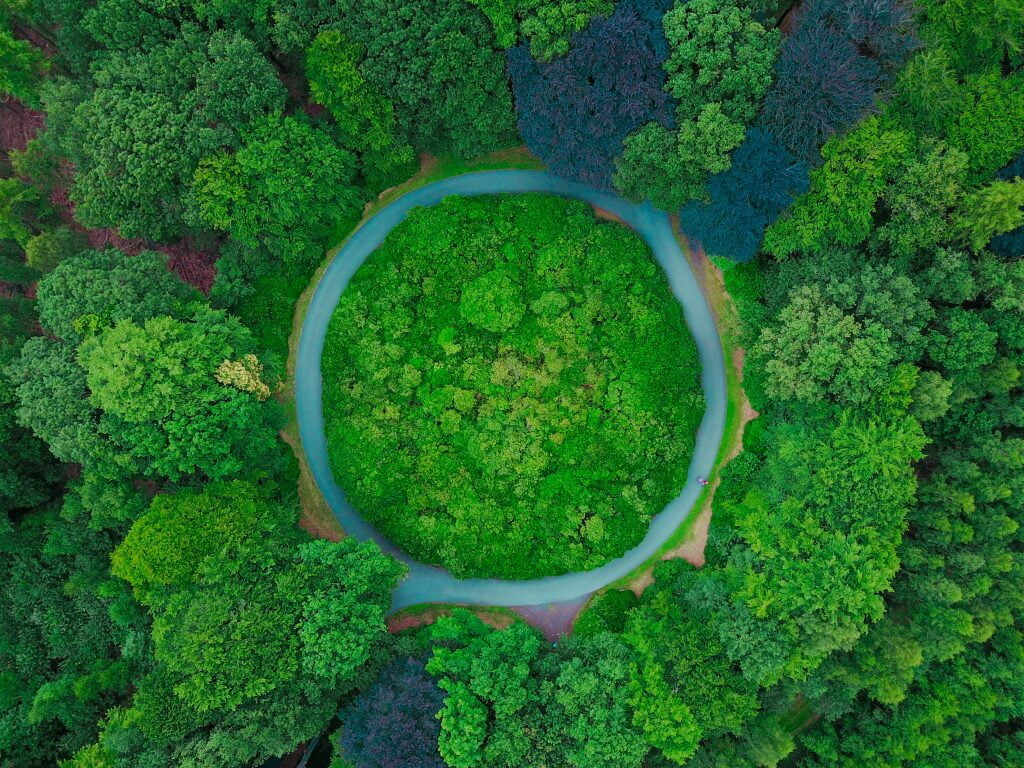
Photo by Thomas Lambert, Unsplash


Ceccherini, G., Duveiller, G., Grassi, G., Lemoine, G., Avitabile, V., Pilli, R., Cescatti, A., 2020. Abrupt increase in harvested forest area over Europe after 2015. Nature 583, 72–77. https://doi.org/10.1038/s41586-020-2438-y

European Commission, 2018. Regulation (EU) 2018/841 of the European Parliament and of the Council of 30 May 2018 on the inclusion of greenhouse gas emissions and removals from land use, land use change and forestry in the 2030 climate and energy framework, and amending Regulation. Off. J. Eur. Union 19, 1–25.

Gardiner, B., Moore, J., 2014. Creating the Wood Supply of the Future, in: Fenning, T. (Ed.), Challenges and Opportunities for the World’s Forests in the 21st Century, Forestry Sciences. Springer Netherlands, Dordrecht, pp. 687–704. https://doi.org/10.1007/978-94-007-7076-8

Jactel, H., Bauhus, J., Boberg, J., Bonal, D., Castagneyrol, B., Gardiner, B., Gonzalez-Olabarria, J.R., Koricheva, J., Meurisse, N., Brockerhoff, E.G., 2017. Tree diversity drives forest stand resistance to natural disturbances. Curr. For. Reports. https://doi.org/10.1007/s40725-017-0064-1

Larsen, S., Bentsen, N.S., Dalgaard, T., Jørgensen, U., Olesen, J.E., Felby, C., 2017. Possibilities for near-term bioenergy production and GHG-mitigation through sustainable intensification of agriculture and forestry in Denmark. Environ. Res. Lett. 12. https://doi.org/10.1088/1748-9326/aa9001

Olofsson, P., Foody, G.M., Stehman, S. V., Woodcock, C.E., 2013. Making better use of accuracy data in land change studies: Estimating accuracy and area and quantifying uncertainty using stratified estimation. Remote Sens. Environ. 129, 122–131. https://doi.org/10.1016/j.rse.2012.10.031

Palahí, M., Valbuena, R., Senf, C., Acil, N., Pugh, T.A.M., Sadler, J., Seidl, R., Potapov, P., Gardiner, B., Hetemäki, L., Chirici, G., Francini, S., Hlásny, T., Jan, B., Lerink, W., Olsson, H., Ramón, J., Olabarria, G., Ascoli, D., Asikainen, A., Jactel, H., Lindner, M., Marchetti, M., Marušák, R., Sheil, D., Tomé, M., Trasobares, A., Verkerk, P.J., Korhonen, M., 2021. Concerns about reported harvests in European forests. Nature 592, 15–17.

Tomppo, E., Schadauer, K., 2008. COST Action E43 Harmonisation of National Inventories in Europe : Techniques for Common Reporting. Brussels.

Wernick, I.K., Ciais, P., Fridman, J., Högberg, P., Korhonen, K.T., From, A., Ceccherini, G., 2021. Quantifying forest change in the European Union. Nature 592, 13–14.


Deux articles récents dans Nature, Abrupt increase in harvested forest area over Europe after 2015 (Ceccherini et coll., 2020)  et Concerns about harvested area and biomass loss in European forests (Palahí et coll., 2021) ont ouvert un débat important sur la bioéconomie forestière en Europe et son impact sur la récolte forestière. Ce qui est clair, c’est que la récolte forestière a augmenté de 6% ces dernières années  (FAOSTAT, 2019) et    non de 69% comme le rapporte Ceccherini et coll. (2020). Les différences d’estimation  sont dues  à un certain nombre de facteurs qui, ensemble, signifient que les prédictions  de  Ceccherini et coll. (2020) sont fausses sont dommageables:

1. L’une des erreurs les plus importantes dans les prédictions est due à la sensibilité croissante    des algorithmes de détection des satellites et  des perturbations depuis 2015. Cette précision accrue signifie que de nombreuses petites exploitations forestières, comme les  éclaircies et les petites coupes, sont maintenant comptées dans les récoltes alors qu’elles n’avaient pas été prise en compte avant 2015. Cette différence de capacité de détection se traduit par une augmentation soudaine des niveaux de prélèvement post 2015, alors que ce n’est que la qualité de la donnée qui change et non la réalité des prélèvements.

2. L’article initial présentait de nombreux cas de prise en compte erronée des perturbations. De nombreuses perturbations ayant affecté de larges étendues de forêts européennes au cours de la période post 2015 induites par les tempêtes, la processionnaire du pin ou les attaques de scolytes ont été attribuées à tort à  l’activité    humaine et ont artificiellement gonflé les estimations de la récolte forestière.

3. La méthodologie de cartographie du changement en comptant les pixels individuels dans les données satellitaires et en additionnant tous les pixels désignés comme perturbation pour calculer la zone totale manque de rigueur statistique et  peut  conduire à  des estimations biaisées.   Une  méthodologie d’échantillonnage stratifiée  appropriée (Olofsson et coll., 2013) devrait être utilisée pour éviter à la fois les erreurs d’omission (faux négatifs) et les erreurs d’inclusion (faux positifs).

Dans l’ensemble, ces facteurs  ont donné    l’impression fausse que la récolte en Europe a augmenté de façon spectaculaire depuis 2015. Il a également  conduit  Ceccherini et coll.  (2020) à attribuer  ce changement apparent aux politiques de  l’Union européenne promouvant l’utilisation du bois en tant que source d’énergie sans aucune preuve  à l’appui de cette conclusion.

Le débat a démontré un certain nombre de points importants:

1. La mesure et la surveillance de l’état des forêts  européennes  sont plus nécessaires que jamais. En particulier, il est particulièrement important que nous adoptions une approche cohérente de la surveillance des forêts dans toute l’Europe  (Tomppo et Schadauer, 2008)

2. Les données de télédétection doivent toujours être vérifiées avec d’autres données telles que des mesures au sol ou des statistiques forestières nationales (Wernick et coll., 2021).  L’utilisation de données de télédétection sans corroborer les preuves induit à la possibilité d’erreurs dues à une mauvaise interprétation des données ou à un biais d’échantillonnage.

3. Les forêts plantées continueront de fournir une quantité croissante de bois et d’autres matières premières forestières au secteur industriel européen, tout en contribuant aux objectifs d’atténuation  du climat de  l’Union européenne  (Commission européenne, 2018).

4. La demande de matériaux à base de bois augmentera à mesure que la société s’avancera vers une économie plus dépendante de la production durable et accrue de matières premières  d’origine végétale :  l’«économie verte ».  Les forêts en général et les forêts plantées en particulier offrent l’une des rares options de pour répondre simultanément à la demande de matière première et à la  nécessité d’atténuer les impacts du changement climatique  (Gardiner et Moore, 2014).

Le rôle des forêts plantées à objectif de  production devient de plus en plus important dans l’économie européenne, aujourd’hui  et à l’avenir. Malgré les inquiétudes concernant les impacts des forêts plantées sur la biodiversité et leur vulnérabilité aux différents dangers, il est clair qu’avec  une planification minutieuse et des pratiques de gestion appropriées, il est possible d’augmenter la superficie et la production des forêts plantées (Larsen et coll., 2017) tout en agissant favorablement pour l’environnement et à des niveaux de risque réduits (Jactel et coll., 2017). La clé est une bonne compréhension des interactions complexes entre les forêts, la gestion, le climat, l’environnement et  la société. L’IEFC est dans une position unique pour aider à  développer cette compréhension grâce à  son  solide réseau de partenaires et à son lien direct avec les acteurs du secteur forêt bois.

par: Barry Gardiner (IEFC)

Photo par Thomas Lambert, Unsplash


Ceccherini, G., Duveiller, G., Grassi, G., Lemoine, G., Avitabile, V., Pilli, R., Cescatti, A., 2020. Abrupt increase in harvested forest area over Europe after 2015. Nature 583, 72–77. https://doi.org/10.1038/s41586-020-2438-y

European Commission, 2018. Regulation (EU) 2018/841 of the European Parliament and of the Council of 30 May 2018 on the inclusion of greenhouse gas emissions and removals from land use, land use change and forestry in the 2030 climate and energy framework, and amending Regulation. Off. J. Eur. Union 19, 1–25.

Gardiner, B., Moore, J., 2014. Creating the Wood Supply of the Future, in: Fenning, T. (Ed.), Challenges and Opportunities for the World’s Forests in the 21st Century, Forestry Sciences. Springer Netherlands, Dordrecht, pp. 687–704. https://doi.org/10.1007/978-94-007-7076-8

Jactel, H., Bauhus, J., Boberg, J., Bonal, D., Castagneyrol, B., Gardiner, B., Gonzalez-Olabarria, J.R., Koricheva, J., Meurisse, N., Brockerhoff, E.G., 2017. Tree diversity drives forest stand resistance to natural disturbances. Curr. For. Reports. https://doi.org/10.1007/s40725-017-0064-1

Larsen, S., Bentsen, N.S., Dalgaard, T., Jørgensen, U., Olesen, J.E., Felby, C., 2017. Possibilities for near-term bioenergy production and GHG-mitigation through sustainable intensification of agriculture and forestry in Denmark. Environ. Res. Lett. 12. https://doi.org/10.1088/1748-9326/aa9001

Olofsson, P., Foody, G.M., Stehman, S. V., Woodcock, C.E., 2013. Making better use of accuracy data in land change studies: Estimating accuracy and area and quantifying uncertainty using stratified estimation. Remote Sens. Environ. 129, 122–131. https://doi.org/10.1016/j.rse.2012.10.031

Palahí, M., Valbuena, R., Senf, C., Acil, N., Pugh, T.A.M., Sadler, J., Seidl, R., Potapov, P., Gardiner, B., Hetemäki, L., Chirici, G., Francini, S., Hlásny, T., Jan, B., Lerink, W., Olsson, H., Ramón, J., Olabarria, G., Ascoli, D., Asikainen, A., Jactel, H., Lindner, M., Marchetti, M., Marušák, R., Sheil, D., Tomé, M., Trasobares, A., Verkerk, P.J., Korhonen, M., 2021. Concerns about reported harvests in European forests. Nature 592, 15–17.

Tomppo, E., Schadauer, K., 2008. COST Action E43 Harmonisation of National Inventories in Europe : Techniques for Common Reporting. Brussels.

Wernick, I.K., Ciais, P., Fridman, J., Högberg, P., Korhonen, K.T., From, A., Ceccherini, G., 2021. Quantifying forest change in the European Union. Nature 592, 13–14.


Dois artigos recentes na Revista Nature, Abrupt increase in harvested forest area over Europe after 2015[AC1]  (Ceccherini et al., 2020)  e  Concerns about harvested area and biomass loss in European forests (Palahí et al., 2021)  abriram um importante debate sobre a bioeconomia baseada na floresta na Europa e o seu impacto na colheita florestal. O que é claro é que a colheita florestal aumentou 6% nos últimos anos  (FAOSTAT, 2019)  e  não os  69% como relatado por  Ceccherini et al. (2020). As diferenças de estimativa devem-se a uma série de fatores que, juntos, significam que as previsões  de  Ceccherini et al. (2020)  não são seguras:

1. Um dos erros mais importantes nas previsões deve-se à crescente sensibilidade dos   algoritmos de deteção de satélites e perturbações desde 2015. Esta sensibilidade acrescida significa que muitas operações florestais de pequena escala, como  desbastes  e pequenas clareiras, estão agora a ser incluídas como colheitas que foram perdidas antes de 2015. Significa também que a colheita ou perturbação dentro da floresta antes de 2015 poderia ter sido perdida nos dados de satélite nestas datas anteriores, mas teria sido detetada subitamente em 2015 e  representaria  um  aumento dos  níveis de perturbação.

2. Havia muitos exemplos de inclusão errónea de distúrbios naturais. Uma série de distúrbios em larga escala nas florestas europeias  no período após 2015 por causa do vento,  traças promissórias de pinheiros,  ataques de besouros, foram  erroneamente atribuídos à atividade humana  e  inflacionaram artificialmente as estimativas de colheita florestal.

3. A metodologia de alteração do mapeamento contando os pixels individuais nos dados de satélite e adicionando todos os pixels designados como perturbação para calcular a área total carece de  rigor estatístico e  pode produzir estimativas  tendenciosas.   Deve ser utilizada uma metodologia de amostragem estratificada  (Olofsson et al., 2013)  que explica tanto os erros de omissão (falsos negativos) como os erros de comissão (falsos positivos).

Em termos globais, estes fatores levaram à ideia falade que a colheita na Europa aumentou drasticamente desde 2015. Também  levaram  Ceccherini et al. (2020)  a atribuir esta aparente alteração   às políticas da União Europeia em matéria de bioenergia e promoção da madeira como fonte de bioenergia sem qualquer evidência que apoie essa conclusão.

O debate demonstrou uma série de pontos  importantes:

1. Medir e controlar as florestas  europeias é mais importante do que nunca. Em particular, é especialmente importante que adotemos uma abordagem consistente da monitorização florestal em toda a Europa  (Tomppo e Schadauer, 2008).

2. Os dados de deteção remota devem ser sempre verificados com outros dados, tais como medições terrestres ou  estatísticas  florestais nacionais (Wernick et al., 2021).  A utilização de dados de deteção remota sem provas corroborantes está aberta à  possibilidade de erros devido a uma interpretação incorreta de dados ou a distorções de amostragem.

3. As florestas plantadas continuarão a fornecer uma quantidade crescente de madeira e outras matérias-primas  no sector industrial europeu,  contribuindo simultaneamente para os  objetivos em matéria de alterações climáticas da União Europeia  (Comissão Europeia, 2018).

4. A procura de materiais lenhosos aumentará à medida que a sociedade avança para uma economia mais dependente da produção de matérias-primas sustentáveis com uma maior utilização de materiais à base de plantas; a chamada “economia verde”.  As florestas plantadas oferecem uma das poucas formas de satisfazer a  procura de uma forma consistente com a necessidade de   também atenuar os impactos das alterações climáticas  (Gardiner e Moore, 2014).

O papel das florestas plantadas e de alta produção está a tornar-se cada vez mais importante na economia europeia, tanto agora como no futuro. Apesar das preocupações com o impacto das florestas plantadas na biodiversidade e da sua vulnerabilidade a  diferentes  perigos, é evidente que, com um planeamento cuidado e  práticas de gestão adequadas, é possível aumentar a área e a produção de florestas plantadas  (Larsen et al., 2017)  beneficiando também o ambiente e com níveis de risco reduzidos (Jactel et al., 2017). O mais importante é uma compreensão adequada das interações complexas entre as florestas, a gestão, o clima, o ambiente e a  sociedade. O IEFC está numa posição única para ajudar a  desenvolver esse conhecimento  através da sua forte rede de parceiros e da sua ligação direta com o sector da silvicultura e dos produtos florestais.

Por: Barry Gardiner (IEFC)

Foto de Thomas Lambert, Unsplash


Ceccherini, G., Duveiller, G., Grassi, G., Lemoine, G., Avitabile, V., Pilli, R., Cescatti, A., 2020. Abrupt increase in harvested forest area over Europe after 2015. Nature 583, 72–77. https://doi.org/10.1038/s41586-020-2438-y

European Commission, 2018. Regulation (EU) 2018/841 of the European Parliament and of the Council of 30 May 2018 on the inclusion of greenhouse gas emissions and removals from land use, land use change and forestry in the 2030 climate and energy framework, and amending Regulation. Off. J. Eur. Union 19, 1–25.

Gardiner, B., Moore, J., 2014. Creating the Wood Supply of the Future, in: Fenning, T. (Ed.), Challenges and Opportunities for the World’s Forests in the 21st Century, Forestry Sciences. Springer Netherlands, Dordrecht, pp. 687–704. https://doi.org/10.1007/978-94-007-7076-8

Jactel, H., Bauhus, J., Boberg, J., Bonal, D., Castagneyrol, B., Gardiner, B., Gonzalez-Olabarria, J.R., Koricheva, J., Meurisse, N., Brockerhoff, E.G., 2017. Tree diversity drives forest stand resistance to natural disturbances. Curr. For. Reports. https://doi.org/10.1007/s40725-017-0064-1

Larsen, S., Bentsen, N.S., Dalgaard, T., Jørgensen, U., Olesen, J.E., Felby, C., 2017. Possibilities for near-term bioenergy production and GHG-mitigation through sustainable intensification of agriculture and forestry in Denmark. Environ. Res. Lett. 12. https://doi.org/10.1088/1748-9326/aa9001

Olofsson, P., Foody, G.M., Stehman, S. V., Woodcock, C.E., 2013. Making better use of accuracy data in land change studies: Estimating accuracy and area and quantifying uncertainty using stratified estimation. Remote Sens. Environ. 129, 122–131. https://doi.org/10.1016/j.rse.2012.10.031

Palahí, M., Valbuena, R., Senf, C., Acil, N., Pugh, T.A.M., Sadler, J., Seidl, R., Potapov, P., Gardiner, B., Hetemäki, L., Chirici, G., Francini, S., Hlásny, T., Jan, B., Lerink, W., Olsson, H., Ramón, J., Olabarria, G., Ascoli, D., Asikainen, A., Jactel, H., Lindner, M., Marchetti, M., Marušák, R., Sheil, D., Tomé, M., Trasobares, A., Verkerk, P.J., Korhonen, M., 2021. Concerns about reported harvests in European forests. Nature 592, 15–17.

Tomppo, E., Schadauer, K., 2008. COST Action E43 Harmonisation of National Inventories in Europe : Techniques for Common Reporting. Brussels.

Wernick, I.K., Ciais, P., Fridman, J., Högberg, P., Korhonen, K.T., From, A., Ceccherini, G., 2021. Quantifying forest change in the European Union. Nature 592, 13–14.


Dos artículos recientes en Nature, Abrupto aumento de la superficie forestal cosechada en toda Europa después de 2015 (Ceccherini et al., 2020)  y Preocupaciones sobre la superficie cosechada y la pérdida de biomasa en los bosques europeos (Palahí et al., 2021) han abierto un importante debate sobre la bioeconomía basada en los bosques en Europa y su impacto en la cosecha de bosques. Lo que está claro es que la cosecha forestal ha aumentado un 6% en los últimos años  (FAOSTAT, 2019)  y  no un  69%, según datos de Ceccherini et al. (2020). Las diferencias en la estimación se deben a una serie de factores que conjuntamente significan que las predicciones de  Ceccherini et al. (2020)  son imprudentes:

1. Uno de los errores más importantes en las predicciones se debe a la creciente sensibilidad de los algoritmos de detección de satélites y perturbaciones desde 2015. Esta mayor sensibilidad significa que muchas operaciones forestales a pequeña escala, como entresacas y pequeños clareos, se están incluyendo ahora como cosechas que no se tuvieron en cuenta antes de 2015. También significa que la cosecha o perturbación dentro del bosque antes de 2015 podría haberse perdido en los datos satelitales en estas fechas anteriores, pero que de repente se hubiera detectado en 2015 y  representaría  un  aumento escalonado en los niveles de perturbación.

2. Hubo muchos ejemplos de inclusión errónea de perturbaciones naturales. Una  serie de perturbaciones a gran escala que afectaron a los bosques europeos en el período posterior a 2015  por el viento,  las polillas procesionales de pino y los ataques de escarabajos de la corteza se atribuyeron erróneamente a la actividad humana  e  inflaron artificialmente las estimaciones de la cosecha de bosques.

3. La metodología de mapeo cambia contando píxeles individuales en los datos del satélite, y sumar todos los píxeles designados como perturbación para calcular el área total carece de rigor estadístico y  puede producir estimaciones sesgadas.  Debe  utilizarse una metodología de muestreo estratificada adecuada  (Olofsson et al., 2013)  que tenga en cuenta tanto errores de omisión (falsos negativos) como errores de comisión (falsos positivos).

En general, dichos factores  han conducido a la falsa impresión de que la cosecha en Europa ha aumentado drásticamente desde 2015. También condujeron a  Ceccherini et al. (2020) a atribuir este aparente cambio a las políticas de la Unión Europea en materia de bio-energía y promoción de la madera como fuente de bio-energía sin ninguna prueba que respaldase esta conclusión.

El debate ha demostrado una serie de  puntos importantes:

1. Medir y monitorizar los bosques  europeos es más importante que nunca. En particular, es especialmente importante que adoptemos un enfoque coherente de la vigilancia forestal en toda Europa  (Tomppo y Schadauer, 2008)

2. Los datos de teledetección deben comprobarse siempre con otros datos,  como las mediciones terrestres o los inventarios forestales nacionales (Wernick et al., 2021). El uso de datos de teledetección sin pruebas corroborantes está abierto a la posibilidad de errores debido a una interpretación incorrecta de los datos o a un sesgo de muestreo.

3. Los bosques plantados seguirán proporcionando una cantidad cada vez mayor de madera y otras materias primas forestales en el sector industrial europeo, al tiempo que contribuirán a los objetivos de mitigación del clima de  la Unión Europea  (Comisión Europea, 2018).

4. La demanda de materiales basados en madera aumentará a medida que la sociedad avance hacia una economía más dependiente de la producción sostenible de materias primas con un mayor uso de material vegetal; la llamada “economía verde”.  Los bosques plantados ofrecen una de las pocas maneras de satisfacer la demanda de una forma consistente con la necesidad de mitigar también los impactos del cambio climático  (Gardiner y Moore, 2014).

El papel de los bosques plantados y de alta producción está deviniendo cada vez más importante en la economía europea tanto en la actualidad como en el futuro. A pesar de las preocupaciones sobre los impactos de los bosques plantados en la biodiversidad y su vulnerabilidad a los diferentes peligros,  es evidente que con una planificación cuidadosa y prácticas de gestión adecuadas es posible aumentar la superficie y la producción de los bosques plantados (Larsen et al., 2017) que también beneficia al medio ambiente y con niveles reducidos de riesgo (Jactel et al., 2017). La clave está en una comprensión adecuada de las complejas interacciones entre los bosques, la gestión, el clima, el medio ambiente y la sociedad. El IEFC está en una posición única para ayudar a desarrollar esa comprensión a través de su sólida red de socios y su conexión directa con los sectores de la silvicultura y la transformación de productos forestales.

Por: Barry Gardiner (IEFC)

Imagen de Thomas Lambert, Unsplash


Ceccherini, G., Duveiller, G., Grassi, G., Lemoine, G., Avitabile, V., Pilli, R., Cescatti, A., 2020. Abrupt increase in harvested forest area over Europe after 2015. Nature 583, 72–77. https://doi.org/10.1038/s41586-020-2438-y

European Commission, 2018. Regulation (EU) 2018/841 of the European Parliament and of the Council of 30 May 2018 on the inclusion of greenhouse gas emissions and removals from land use, land use change and forestry in the 2030 climate and energy framework, and amending Regulation. Off. J. Eur. Union 19, 1–25.

Gardiner, B., Moore, J., 2014. Creating the Wood Supply of the Future, in: Fenning, T. (Ed.), Challenges and Opportunities for the World’s Forests in the 21st Century, Forestry Sciences. Springer Netherlands, Dordrecht, pp. 687–704. https://doi.org/10.1007/978-94-007-7076-8

Jactel, H., Bauhus, J., Boberg, J., Bonal, D., Castagneyrol, B., Gardiner, B., Gonzalez-Olabarria, J.R., Koricheva, J., Meurisse, N., Brockerhoff, E.G., 2017. Tree diversity drives forest stand resistance to natural disturbances. Curr. For. Reports. https://doi.org/10.1007/s40725-017-0064-1

Larsen, S., Bentsen, N.S., Dalgaard, T., Jørgensen, U., Olesen, J.E., Felby, C., 2017. Possibilities for near-term bioenergy production and GHG-mitigation through sustainable intensification of agriculture and forestry in Denmark. Environ. Res. Lett. 12. https://doi.org/10.1088/1748-9326/aa9001

Olofsson, P., Foody, G.M., Stehman, S. V., Woodcock, C.E., 2013. Making better use of accuracy data in land change studies: Estimating accuracy and area and quantifying uncertainty using stratified estimation. Remote Sens. Environ. 129, 122–131. https://doi.org/10.1016/j.rse.2012.10.031

Palahí, M., Valbuena, R., Senf, C., Acil, N., Pugh, T.A.M., Sadler, J., Seidl, R., Potapov, P., Gardiner, B., Hetemäki, L., Chirici, G., Francini, S., Hlásny, T., Jan, B., Lerink, W., Olsson, H., Ramón, J., Olabarria, G., Ascoli, D., Asikainen, A., Jactel, H., Lindner, M., Marchetti, M., Marušák, R., Sheil, D., Tomé, M., Trasobares, A., Verkerk, P.J., Korhonen, M., 2021. Concerns about reported harvests in European forests. Nature 592, 15–17.

Tomppo, E., Schadauer, K., 2008. COST Action E43 Harmonisation of National Inventories in Europe : Techniques for Common Reporting. Brussels.

Wernick, I.K., Ciais, P., Fridman, J., Högberg, P., Korhonen, K.T., From, A., Ceccherini, G., 2021. Quantifying forest change in the European Union. Nature 592, 13–14.